
Paris, Taipei, and Tokyo: What Numerix's 2026 user groups revealed about AI and risk
Numerix recently hosted a series of user group meetings in Paris, Taipei, and Tokyo. Each event brought clients together to explore Numerix solutions, share insights, and discuss the future of artificial intelligence (AI) and risk analytics in capital markets.
Event highlights included demonstrations of AI agents tracing the source of a value at risk (VaR) move in minutes and translating a plain-language market scenario into a stress test, alongside client examples of how AI is already being used in production. Across all three cities, a common theme emerged. AI is changing how people interact with quantitative analytics, not how the numbers are produced. In Numerix’s view, AI handles the questions and the workflow, while deterministic, auditable analytics should produce the underlying calculations.
Paris sets the bar for trustworthy AI
Numerix CEO Manny Conti kicked off the Paris user group by outlining the principles behind Numerix’s AI strategy. He expects AI to drive more demand for analytics, as every major technology shift has. But while an AI-drafted email can be mostly right, Conti noted that capital markets are held to a much higher standard. The numbers “have to be right.”
A pricer that looks right but hedges wrong
The next session showed why numbers that are close but not exact fall short. Ilja Faerman, SVP of Product Strategy, shared an internal test in which a large language model (LLM) built a pricer for a cross-corridor variance swap. It came within 3% of the Numerix fair value, but even with five times as many Monte Carlo paths, its Greeks were off by 60% or more. "If your PV is sort of reasonable, but the Greeks are off, the model is unusable," Faerman said. Numerix therefore lets AI handle language and workflow while its own analytics do the math, with a Model Context Protocol (MCP) layer giving AI access to Numerix documentation, pricing and risk APIs, and in the near future, task-level agents.
Clients are already building on that foundation. A European bank's equity derivatives team showed how it moves CrossAsset models, prototyped with the Python SDK, into production, using a payoff scripting language to build pricers for unfamiliar products from existing building blocks.
From days of investigation to a single question
Later in the event, Faerman previewed Oneview agents, planned for release in the first quarter of 2027. In a recorded demo, an agent flagged the single book behind a VaR move and traced the cause. A complex investigation that once took days now takes a single question and a few minutes.
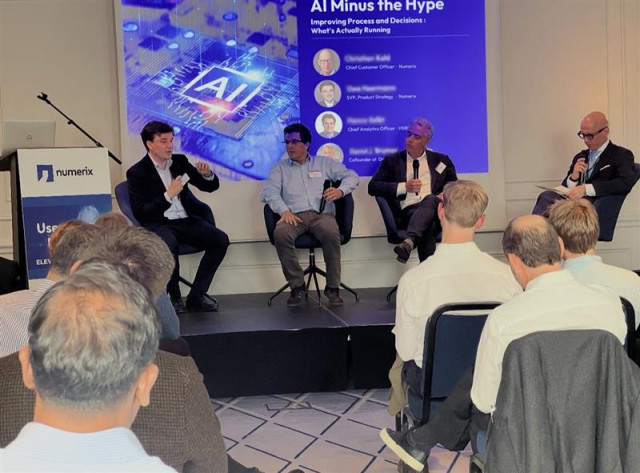
Getting agents like these into production was the focus of the “AI, Minus the Hype” panel. Numerix’s Chief Customer Officer, Christian Kahl, observed that whether he is speaking with CIOs, CROs, traders, or quants, no one asks anymore whether firms should put AI into production. That debate has settled in favor of adoption. The questions now are what is running today and who is accountable when something goes wrong. For regulated firms, panelists said, accountability starts with reproducibility. Firms need to be able to show regulators exactly which code ran, and when, to produce a given result.
From term sheet to price in plain language
The day’s final sessions showed what reproducible AI looks like in practice. Senior Pre-Sales Consultant Owen Rooney uploaded a term sheet to Claude and simply asked for a price. Claude ran the valuation through NxCore Analytics Services (NAS), then solved for the coupon that prices the note to par and for a knock-in barrier given a coupon. Structuring work that normally runs through a quant or a pricing tool happened in a conversation. And because NAS applies the same valuation policy and market data as the end-of-day process, the answer exactly matches the number the desk will see in its official run. In the final session, Andrea Allegra, Executive Director of Product Management, demonstrated how AI agents could utilize a CrossAsset knowledge base to turn a term sheet into a ready-to-run pricing template in a fraction of the time it would take a human financial engineer.
Taipei turns what-if questions into stress tests
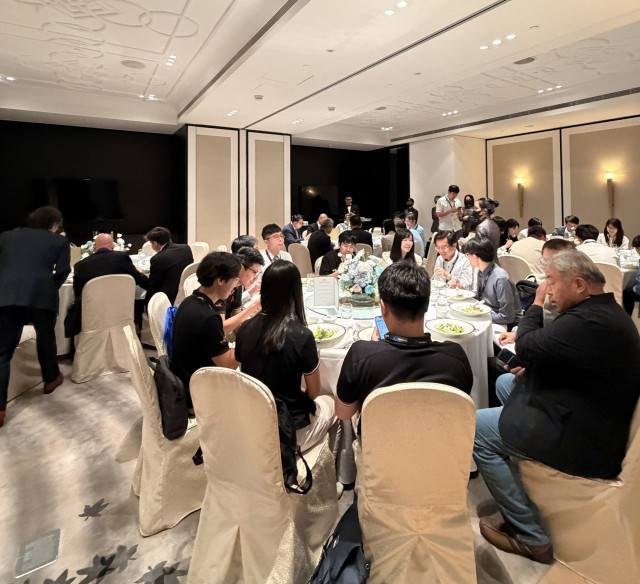
A week later, the conversation moved to Asia. Kahl opened in Taipei by noting Taiwan's rise to become the world's fifth-largest equity market, with a capitalization of US$5.1 trillion as of mid-September 2026, according to Bloomberg data presented at the event. He described LLMs as the new way people access analytics, while deterministic analytics remain the source of every official number. Faerman's product roadmap and a guest presentation on Taiwan's move to central clearing for OTC derivatives followed.
A what-if question becomes a stress test
From market structure, the presentation moved to live demonstrations. Linus Yu, VP of Pre-Sales for APAC, asked an AI agent connected to Oneview how markets would react if an AI bubble spilled into US interest rates. The agent built a phased stress scenario, with equity drops of 30% to 50%, curve shifts, and wider credit spreads, then ran it against the portfolio. Risk teams can still challenge or adjust the scenario, but the agent quickly turns an extreme market view into a scenario the system can run.
Matched in total, mismatched by currency
Stress testing discussions continued with a session on asset-liability management (ALM) for Taiwan life insurers under IFRS 17, showing how balanced company-level DV01 can mask significant TWD and USD mismatches. The speaker recommended separate DV01 gap targets for each currency, set through reverse stress testing.
Same analytics, a fraction of the time
Speed was the final theme of the day. Pre-Sales Engineer Wes Laih closed with NxCore Workspaces use cases. A commodity exotics pricing app cut runtimes from about 50 minutes in Excel to less than 10 minutes in NxCore Workspaces, and a structured products market-making desk moved its Numerix analytics from an on-premise server deployment to the Workspaces cloud for four times faster portfolio Greeks.
Tokyo shows agents at work
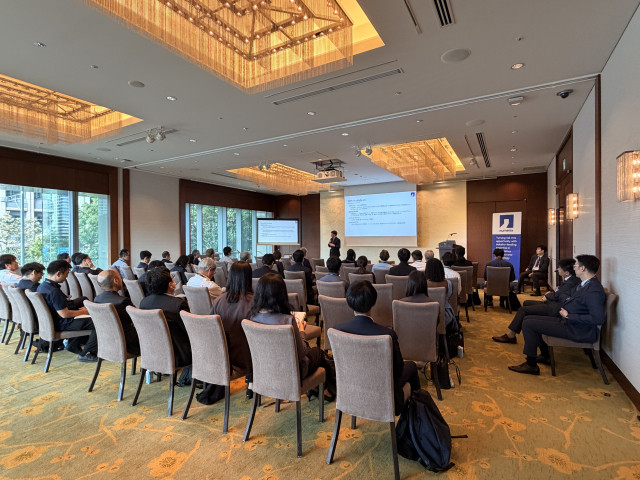
Tokyo’s user group opened with remarks from Kahl and Faerman’s roadmap, highlighting the availability of the CrossAsset AI Add-on and Oneview agent capabilities planned for the first quarter of 2027.
Root cause before the morning meeting
The demonstrations picked up where Taipei left off. Ying Qi Zhu, Director of Pre-Sales at Numerix, showed a Oneview agent explaining overnight VaR moves and building currency intervention scenarios. When asked if AI really costs less than people, Zhu pointed to a stronger business case: AI agents can help bridge the industry’s critical shortage of highly skilled quantitative specialists.
Agentic tooling built in two weeks
Next came proof of how quickly such agents can be built. Laih and a guest from a multilateral development bank's treasury team showed agents exploring XVA portfolio novations. Backing out dealers’ implied funding spreads alone requires hundreds of calculations a month. Using an API gateway to NxCore Workspaces, AI wrote and tested the calculation tools against Oneview results in under two weeks. The approach was summarized in four phrases: AI builds, the agent runs, Numerix computes, and the expert decides.
The program then turned to Japan's derivatives market itself. According to an update presented at the event, overseas investors account for 60% to 70% of trading volume in Japan's equity derivatives. The same update showed that JPY interest rate swap clearing has grown tenfold since 2021, and that the number of companies participating in Japan's power futures market has grown from 13 at launch to 202.
Routine work cut by 40%
To close the day, two risk managers from a Japanese securities firm reported that AI agents cut their model risk team's time on routine documentation, coding, and debugging by almost 40%. The speaker paired that gain with firm guardrails, including preventing unsupervised agent access to production systems and a circuit breaker to stop a running agent. His colleague described a risk reporting prototype, queried in plain language, that an engineer built with AI in about a week.
Looking forward
Across Paris, Taipei and Tokyo, attendees arrived at a consistent view: AI is expanding who can access analytics and how frequently. This raises the stakes on the reliability of the underlying numbers. The presentations showed how firms can combine LLMs and AI agents with deterministic, auditable calculations while keeping experts in control of critical decisions.
These meetings are part of Numerix's ongoing series of user group events held globally. They bring Numerix to clients in their local markets, and the feedback gathered helps shape our product roadmap. To learn about upcoming user group events in your region, reach out to us.
Frequently Asked Questions
1. How can capital markets firms use AI in risk analytics without compromising the accuracy of official numbers?
AI-generated results can look plausible and still fail where it matters. In an internal Numerix test shared at the 2026 Paris user group, an LLM-built pricer for a cross-corridor variance swap came within 3% of fair value, but its Greeks were off by 60% or more. Numerix lets AI handle language and workflow while deterministic, auditable analytics produce the calculations. Because NxCore Analytics Services (NAS) uses the same valuation policy and market data as the end-of-day process, AI-driven answers match the desk’s official run.
2. How can risk teams investigate VaR moves and build stress scenarios faster?
Tracing the source of a VaR move has traditionally taken days of manual investigation. At Numerix’s 2026 user groups, Numerix demonstrated Oneview agents, planned for release in the first quarter of 2027, that find the book behind a VaR move and trace the cause in minutes. In Taipei, an agent turned a plain-language question about an AI bubble spilling into US interest rates into a stress scenario with equity drops of 30% to 50%, then ran it against the portfolio.
3. How are financial institutions putting AI agents into production while staying accountable to regulators?
At the 2026 Paris user group, panelists said accountability starts with reproducibility. Firms must be able to show regulators exactly which code ran, and when, to produce a given result. At the Tokyo user group, a Japanese securities firm said AI agents cut its model risk team’s time on routine documentation, coding, and debugging by almost 40%. It paired that gain with guardrails, including no unsupervised agent access to production systems and a circuit breaker that can stop a running agent.


